Tía Tula Spanish School Blog Tía Tula Spanish Language School - Salamanca 蒂亚图拉 博客 (blog de Tía Tula en chino) ティアトゥラ スペイン語学校のブログ (blog de Tía Tula en japonés) Blog van de Spaanse talenschool Tía Tula Blog da Tía Tula, Colégio de Espanhol Blog di Tía Tula, Scuola di Spagnolo Blog de l'école d'espagnol Tía Tula Tía Tula Spanish School Blog Blog de Tía Tula, Colegio de Español
Showing posts with label Spain. Show all posts

Thursday, June 27, 2013

E Day – the celebration of all who speak Spanish

More than 500 million people speak Spanish. It is the second language in the world in number of native speakers and the third most used language on the Internet.  To celebrate this vast wealth of Spanish culture, the Cervantes Institute organizes a day that aims to establish itself as the celebration of all who speak this language.

E Day, or as it is also known, Day of Spanish,  is the festive commemoration hosted by Cervantes Institute since 2009 to celebrate all those who speak Spanish. It took place on Saturday 22nd June, and aimed to spread the culture of Spanish, and celebrate it’s importance in the world.


The Cervantes Institute in Madrid celebrated by hosting a program of activities. Some of its activities were aimed at children. Among them was “Cuentacuentos”.  Stories rich in cultural heritage were read on various folk tales and legends of Spanish and Latin American countries such as Mexico, Cuba or Paraguay.

There was a magic show named “La magia de las palabras”, created by the Illusionist Peter Volta where the words took on a new dimension in the art of magic.  Other themed activities were “Taller de letras creativas”, “Letras que vuelan” and “Visita a la Caja de las letras.”

Cervantes Institute in Alcala de Henares also celebrated E Day with an open day and activities such as “Visita la exposición - Places of inspiration." Persons enjoyed a set of pieces by some of the most prestigious Spanish artists and Hispanic Americans in the second half of the twentieth century, among them, Antonio Saura, Luis Gordillo, Andreu Alfaro, Eduardo Arroyo, Eduardo Chillida, Miquel Barceló, Lucio Muñoz, and Roberto Matta. 

The prints are inspired by paintings and literary works such as "Don Quixote" and the poetry of Lorca, and the great masters of the Museo del Prado (Goya, Velazquez, El Greco and Rubens). Cervantes Institute in Alcala de Henares also hosted “Taller infantil: Graba y estampa” which invited children to work with words in a dynamic and fun way.

All scheduled activities were free, open to the public and did not require previous registration to attend.


Debra, student of Tia Tula

Thursday, February 7, 2013

The Instituto Cervantes celebrates the culture that will spread throughout 2013


The Instituto Cervantes has presented a program that seeks  "excellence and quality"

The Instituto Cervantes has introduced its cultural program for this year in an act of "celebration of culture" which has involved numerous artists and creators. A program of activities aims to show the world the best of the Spain’s culture and Spanish, which has "an extraordinary wealth and is one of our best resources".

The presentation was attended by representatives of the most important cultural institutions and relevant cultural personalities, writers such as Lorenzo Silva Fernando Savater, the musician Antón García Abril, theater director Jose Luis Gomez, the singer Juan Carmona, soprano Pilar Jury, actor Francis Lorenzo, designer Modesto Lomba, among many others. This "party culture" concluded with a recital by acclaimed pianist Rosa Torres-Pardo and singer Rocio Marquez, who played pieces by Falla, Albéniz and Granados in a short recital.

"They are not easy years," acknowledged the director of the Instituto Cervantes, Victor Garcia de la Concha. "Budget constraints have forced us to think hard about" the development of a "excellent" program, he said, which exists across five Hispanic continents, and in which the Latin American presence is essential.

The director of the Institute of Culture, Montserrat Iglesias, has shelled the main lines of 2013 programming in more than 80 cities in which the Instituto Cervantes has centres or classrooms.

Artists of all genres and specialties starred in various acts, including names such as Mario Vargas Llosa, Kenzaburo Oe, Antón García Abril, Ainhoa ​​Arteta, Maria Bayo, Pedro Halffter, Fernando Iwasaki, Jorge Edwards, Lorenzo Silva, Luis Landeros , Rosa Montero, Carlos Nunez, Concha Buika, Cesc Gelabert or Pilar Jurado.

Literature, film and music, theater, dance, art, history and popular science are some of the areas that cover the cultural activities which the Instituto Cervantes "pursues excellence and quality."

Each centre of the Instituto Cervantes will host a wide range of activities with clear teaching, and from which numerous courses will be taught along with workshops and seminars. This is in close collaboration with other Spanish and local institutions and Spanish embassies in Spanish-speaking countries. The latter fits with the mission of "latinamericanize" the Instituto Cervantes.

In short, throughout 2013, the Institute will show the cultural heritage of Spain.

Text translated from the Instituto Cervantes website.

Wednesday, October 10, 2012

Spanish day 12/10/12.


The 12/10/12 is a national holiday in Spain and it is called ´Día de la hispanidad´ but what does that mean?
This public holiday is a holiday that takes place every year on the 12th October to commemorate the anniversary of Christopher Columbus´s arrival in the Americas. 

This day is also a day which is celebrated in other countries as well as Spain. In Spain, it´s also a day which is dedicated to the patron Saint of the Hispanic people ´nuestra señora del Pilar´ and to the Spanish civil guard. 

It is known as the ´Día de la hispanidad´ to emphasise Spain´s connection to the international Hispanic community. 

The day was first held in Madrid in 1935. Nowadays the armed forces do a military parade through Madrid. 

The day isn´t celebrated very much; there are no parades as such, just the military parade in Madrid and no events are planned.     

So if you were wondering what it´s all about, know you have a an idea.

Saturday, September 29, 2012

Autumn is here!


As you’ll have all noticed, autumn has arrived in Salamanca. Autumn in Salamanca isn’t just the return off all the students to Salamanca but the change in the weather too!

I personally love autumn; it’s the time of year when you can finally get your boots and big coat out. It’s the time when you arrive home to a warm house and of course, start preparing for the winter. Autumn in Salamanca is different, at least from where from where I come from. The temperatures drop quite suddenly but there is still the chance of fine days, just that they’re not as warm as the days in summer.

Salamanca has a moderate climate with hot and dry summers followed by cold winters. Autumn and spring go pretty much unnoticed, as they don’t last very long.

So if you’re a new student to Tía Tula or you’re packing getting ready to come to Salamanca, don’t forget to pack something warm, just in case.

Thursday, September 6, 2012

Say good bye to the summer and hello to the party in Salamanca


We leave behind the month of August and at the same time the summer. Farewell to the summer! Yes, but before saying hello to the new academic year, we are going to enjoy the parties in town that take place in this month of transition which is normal and the routine during autumn and winter.

(The idea with the academic courses and the normal and routine in autumn and winter, it´s if we speak about the classes in the schools, institutions or university; in the Spanish School, like ours, you know that we have courses perpetually because there are classes that run continuously and others that  start nearly every week.)

Salamanca celebrates (in honor of its Saint, la Virgen de la Vega) its fundamental local’s parties during the second and third week of September (specifically this year, the officials dates - the non officials lengthened - are from the 7th to the 15th of this month.) : firework, concerts, cattle market,  bull runs, music in the street full of people and stands with snacks and drinks with the famous Feria de Dìa - from the 6th to the 16th – the stands turned up nearly in the last years, in the flag – like a small city – of this parties.

You can see for example on the following link the full program of festival and fiestas of Salamanca for thisyear 2012.

We are working on integrating some activities of those parties in our next program of extracurricular activities; we invite you to participate in it, in order to realize all you could do.

The city is precious those days, with all the students that comes back to it, and with all that atmosphere of party, you deserve to experience it and fully enjoy it.

See how many pinchos (snacks) of the festival you could try before they actually leave.

We will try to incorporate some of the activities of these parties in our next school programs, we invite you to participate. The city is beautiful during these days, with all the students returning and with all the festive turmoil  that it makes it well worth living it and enjoying it to the fullest. 

See how many pinchos you can eat before the casetas are packed away...

Thursday, July 26, 2012

Summer photo of Tía Tula


A tradition of Tía Tula is to take a picture of the students, teachers and staff in front of the entrance on Rúa mayor street when summer comes. There is a Spanish expression and it says “no están todos los que son pero sí son todos los que están” that means, “Not all of the listed are here, but the ones that are here, are listed”. This is a good reflection to practice Ser / Estar (In fact, there are other people in Tía Tula at this time - it is a picture only of the morning shift - but all people that appear in the photo are from Tia Tula: either students, teachers or school staff)

This summer photo was taken a few days ago and already a bit old because some students have gone and new ones have arrived (it might be the destiny of a Spanish language school). Let’s see if it still remains beautiful when we take another one in August.

Will you be in the next photo, or the one after the next? We are sure you'll leave here smiling!

Tuesday, July 24, 2012

Del Bosque in Salamanca!


It is still fresh in our minds that Spanish national football team won the EURO Cup 2012. The other day, Del Bosque, the director of Spanish football team, came to visit Salamanca! The plaza mayor was full of football funs, even though it was a weekday. (This might be because it is Spain..?)  Del Bosque was actually born in Salamanca, therefore, he came to show the trophy to the people of his hometown.


The speech itself was less than 5 minutes and was plain. It would have been more impressive if Del Bosque had behaved cool just the enthusiastic welcome mood of the crowd.

Del Bosque is also involved in the sports promotion of Salamanca and he runs a program called Vicente Del Bosque Campus (http://campusvicentedelbosque.com/) The director believes that the cultural interchange though sports makes people more accepting of other cultures. If you are interested, you can check the site above.

Wednesday, June 20, 2012

Euro 2012: Full of surprises


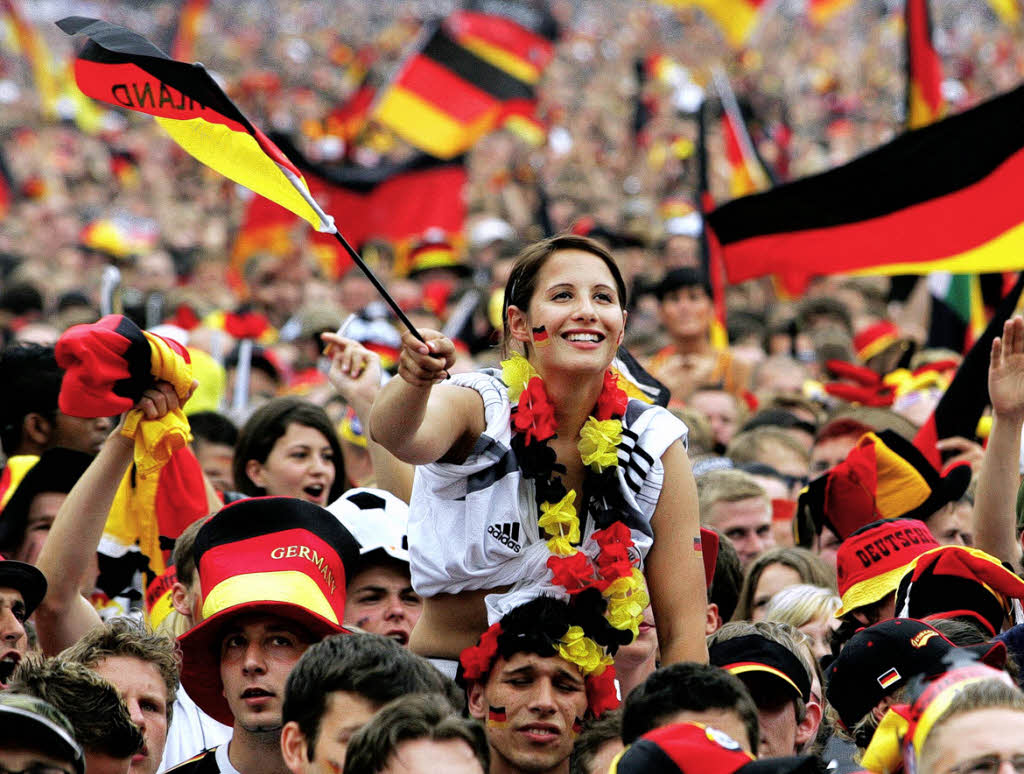
As Euro 2012 reaches its knockout stage, dreams get shattered and new hopes arise. The tournament has been full of surprises so far, off and on the pitch. First of all Mr. Bendtner and his magnificent underwear. Denmark striker Nicklas Bendtner has been fined €100,000 and banned for one match for exposing a sponsored pair of underwear after scoring against Portugal. The fine seems to be a bit high if you compare it to the UEFA fines for racism: £45,000 (Spain, 2004), £16,500 (Serbia, 2007) and £10,000 (Croatia, 2008). Next to this brilliant peace of guerilla marketing a lot of attention has been focused away from the playing field because of charges of racism, anti-Semitism, homophobia and worries about violence in the host countries. In a press conference, Polish sports minister Joanna Mucha has confirmed that 314 people were treated by medical staff in 16 reported violent cases connected to the tournament. UEFA has announced that disciplinary proceedings have been opened against the Football Union of Russia (RFS) for the improper conduct of its supporters (setting-off and throwing fireworks, attacking stewards, racist chants direct at Czech defender Theodor Gebre Selassie and more).
 
Luckily, the football side of the tournament has been fun and very surprising. After the brilliant game against Czech Republic, Russia was labeled one of the best teams in the tournament. But then, the Greek surprised us all by defeating Russia 1-0 and sending the team home. The pre-tournament favorite Dutch squad certainly surprised us all by losing all games in the group of death. But that is what we love about sports. Not only the triumph of the underdog, but the fall of the champion. But will the real champion fall? At this moment Germany seems to be the only real challenge in Spain's route to winning the third consecutive cup. Hopefully the tournament will keep on surprising us all. I'm just afraid that Euro 2012 will end up like Gary Lineker's most famous quote: "Football is a simple game, 22 men chase a ball for 90 minutes and at the end, the Germans win."


Soerin van Nieuwland
(student of Tía Tula and football fan)